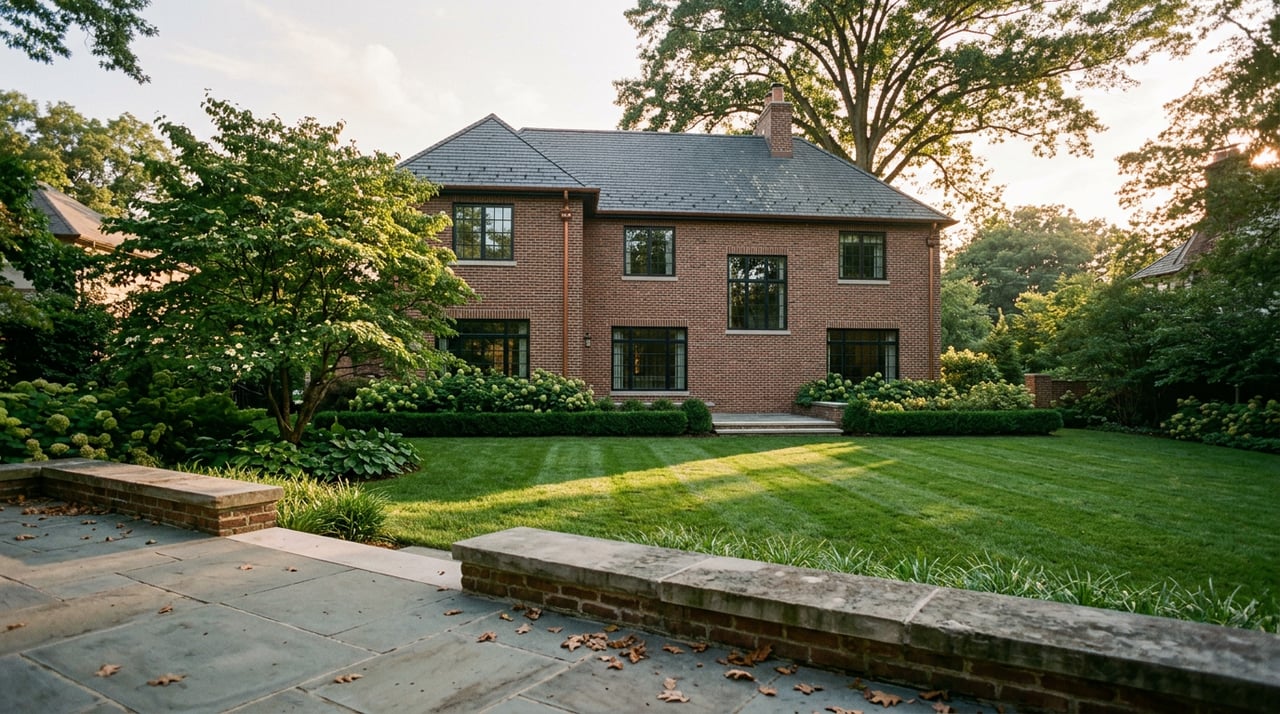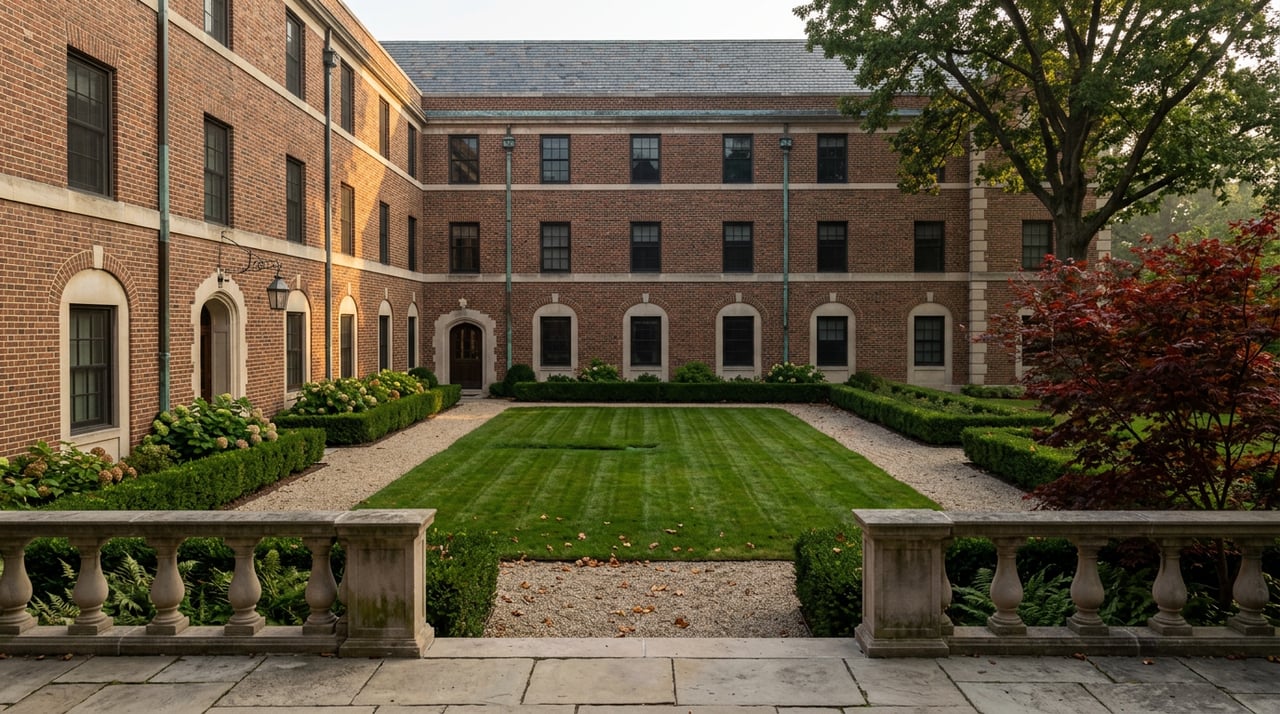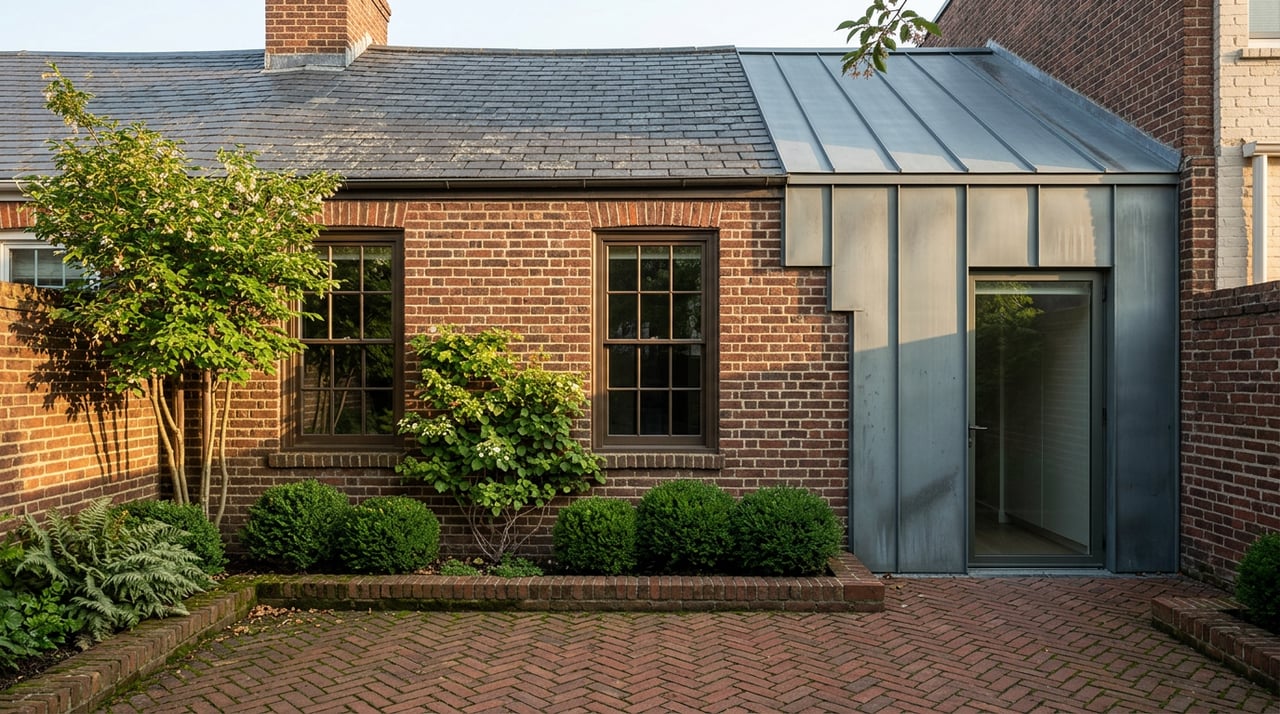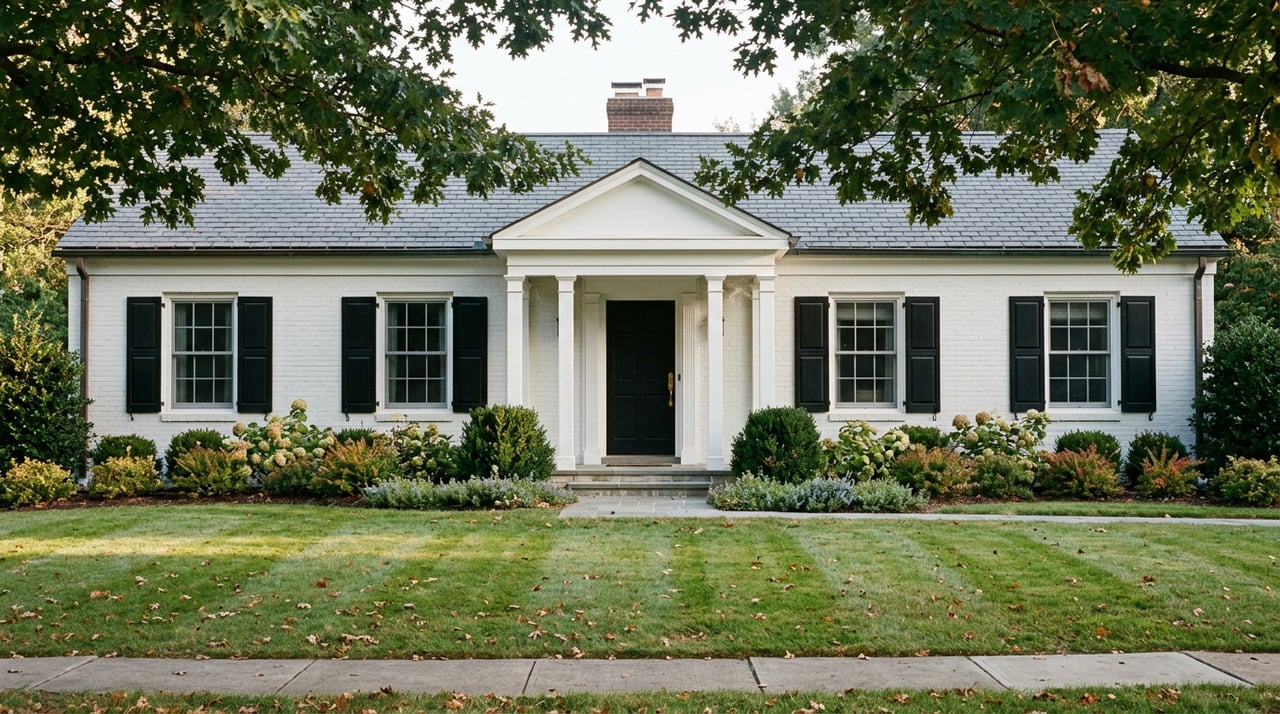
Two center-hall colonials, built within a decade of each other, priced within a few thousand dollars of one another. One sits on a quiet block in Washington, DC. The other sits four blocks north, across Western Avenue, in Maryland. A buyer touring both on the same Saturday could be forgiven for assuming the only real difference is which side of the street the mailbox faces.
That assumption is the expensive part.
Chevy Chase, DC and Chevy Chase, MD share a name, a founding developer, and a streetcar-era architectural vocabulary because they were, in fact, one project. Francis G. Newlands and the Chevy Chase Land Company platted the whole corridor along Connecticut Avenue starting in 1890, and the houses on both sides still reflect that shared origin: Tudors, Colonial Revivals, Cape Cods, and the occasional Sears catalog home built from a kit. What Newlands could not plan for was that a national capital would eventually draw a hard governance line through the middle of his development. That line is where the real comparison starts.
The Name Hides A Governance Split
On the DC side, Chevy Chase is part of Ward 3, a single jurisdiction with one set of tax rules, one public school system, and one office that handles assessments. On the Maryland side, "Chevy Chase" is not one government at all. It is a cluster of separate municipalities, including the Town of Chevy Chase and Chevy Chase Village, each layered on top of Montgomery County's base rate with its own additional levy. Two Maryland-side homes a few blocks apart can sit in different municipalities entirely, each setting its own budget and its own tax rate through its own local hearings.
That matters more than it sounds like it should, because it means a Maryland-side listing's tax line cannot be estimated from the county rate alone. You have to know which specific municipality the parcel falls in before you know what you will actually pay.
The Tax Line You Won't See On The Listing
Here is where the two sides diverge in ways a comparable-sales sheet will not show you.
| Chevy Chase, DC | Chevy Chase, MD | |
|---|---|---|
| Base residential rate | $0.85 per $100 of assessed value (DC Class 1A) | Montgomery County's base rate, plus a separate municipal levy set by whichever town or village the parcel sits in |
| Assessment growth cap | 10% annual cap, plus a Homestead Deduction that reduces assessed value by $91,950 for tax year 2026 on an owner-occupied home | Maryland's statewide Homestead Tax Credit also caps annual assessed-value growth at 10%, applied against the county-plus-municipal total |
| Income tax structure | One graduated DC resident income tax, no separate county layer | Maryland's graduated state income tax plus a Montgomery County local income tax of 3.20% |
| Who sets the rate | DC Council, citywide | Montgomery County plus a separate municipal council for each town or village |
The practical effect: a DC-side buyer can look up one rate, one deduction, and know their number. A Maryland-side buyer is comparing two houses that might carry noticeably different effective rates purely because of which municipal line they fall on, independent of the home's price or condition.
What The Number On The Listing Actually Means
Even the headline price needs a little unpacking before you can trust it.
Redfin's market read for Chevy Chase-DC showed a median sale price of $1.5 million over the three months ending in May 2026, up 2.1% from the same period a year earlier, with a median of $609 per square foot and 57 homes sold in May alone, up from 44 the prior year. Homes were taking a median of 17 days to sell, a few days longer than the 14-day pace the year before. Earlier in the same year, as of late February 2026, Zillow's read on the neighborhood came in lower, pegging typical home value near $1.36 million and median sale price closer to $1.23 million. Neither number is wrong. They are measuring slightly different pools of homes at different points in the same year, which is exactly the point: any single median you find online is a snapshot, not a fact you can carry into an offer. The structural costs, tax rate, assessment cap, and which specific jurisdiction you are buying into, matter more than which data provider's headline you happened to read on a given week.
There is also a lower-cost entry point on the DC side that a straight price comparison misses entirely. In a recent Redfin snapshot, 12 condos were listed for sale in Chevy Chase-DC at a median listing price of $250,000, in established buildings like the Jocelyn House, Chase Plaza, Chase Flats, and the Garfield, all clustered along Connecticut Avenue within walking distance of the Friendship Heights Metro. Those units typically sit on the market longer, around 82 days, but they represent a real way into the neighborhood's walkable core without competing at the single-family price point. The Maryland side, by contrast, is built almost entirely around detached single-family lots, with the Village section and its larger estate-style homes commanding some of the highest prices in Montgomery County. If lot size and privacy matter more to you than a shorter commute or condo living, that difference alone may decide which side of Western Avenue makes sense.
Five Questions Worth Asking Before You Compare Two Listings
If you are cross-shopping both sides of the line, the comparable-sales sheet will not answer these, so ask your agent directly:
- Which specific municipality does this Maryland parcel sit in, and what is its current combined county-plus-municipal tax rate?
- If I am buying in DC, does the Homestead Deduction and 10% assessment cap already apply, or does the current owner not qualify for owner-occupant status?
- What did DC's recordation and transfer tax actually cost on this specific price point? DC's Office of Tax and Revenue sets it at 1.1% for transfers under $400,000 and 1.45% at $400,000 or above, and that scales meaningfully at Chevy Chase price levels.
- Am I eligible for DC's Home Purchase Assistance Program, which can provide up to $202,000 in gap financing and $4,000 in closing cost assistance for qualifying buyers, a benefit that only exists on the District side of the line?
- Does the Maryland seller's disclosure form say "disclosure" or "disclaimer"? Maryland gives sellers that choice, and a disclaimer statement shifts far more of the burden onto your own inspection.
The Library Everyone Is Watching
The clearest evidence that the two sides evolve under different rules is happening right now, on the DC side only.
In January 2026, DC's Deputy Mayor for Planning and Economic Development selected Rift Valley Chevy Chase, LLC to redevelop the Chevy Chase Civic Site on Connecticut Avenue NW, the aging library and community center block built in 1968 and 1971. The plan, designed by Studios Architecture, replaces both buildings with a 23,500-square-foot library, a 21,600-square-foot community center, roughly 8,000 square feet of ground-floor retail, and 177 units of housing, split between 54 affordable units and 123 at market rate. City officials have said the project could open by 2030 if financing and approvals hold.
The plan has not landed quietly. The Washington Post covered the debate over building housing on top of public library land, and by early 2026 opponents had already taken legal steps to challenge it. One Advisory Neighborhood Commissioner summed up the split at a community meeting by noting that "certainly those against any housing aren't happy," while acknowledging that housing advocates were not entirely satisfied either.
Whatever your view of the project, the mechanism behind it is the point. This kind of redevelopment on public land, negotiated through a District RFP process, funded and rebuilt under a citywide library master plan, is a DC governmental tool. Nothing comparable is unfolding on the Maryland side of the same corridor, not because the Maryland municipalities lack ambition, but because the tool itself belongs to DC's civic land process. The same line that sets your tax rate also sets who can redevelop public land next to your house, and on what timeline.
Frequently Asked Questions
Is Chevy Chase, MD one town with one government? No. It is a cluster of separate municipalities, including the Town of Chevy Chase and Chevy Chase Village, each with its own council and its own tax overlay layered on top of Montgomery County's base rate.
Will the Civic Site project change home values in DC's Chevy Chase? The project is still in the planning and community engagement phase, with an estimated opening around 2030 if approvals and financing stay on track. It is too early to attach a specific value impact to a project that has not broken ground.
Is DC always the lower-tax option? Usually, for owner-occupants who qualify for the Homestead Deduction and the 10% assessment cap. But the actual gap depends on which specific Maryland municipality you are comparing against, since each one sets its own additional rate on top of the county base.
If you are weighing a listing on one side of Western Avenue against one on the other, the honest answer is that the comparison takes more than a price-per-square-foot calculation. It takes knowing which jurisdiction you are actually buying into, and what that jurisdiction is doing next.
District Property Group works both sides of that line every week. Let's connect to discuss your real estate goals.