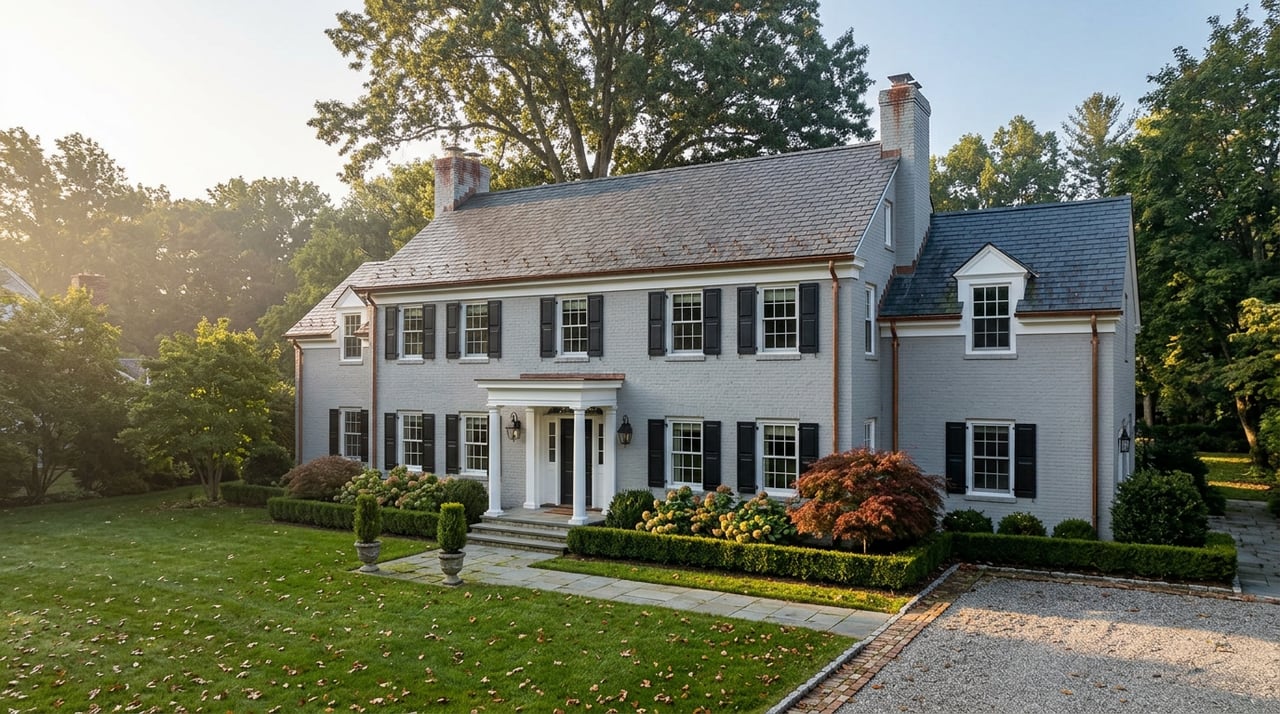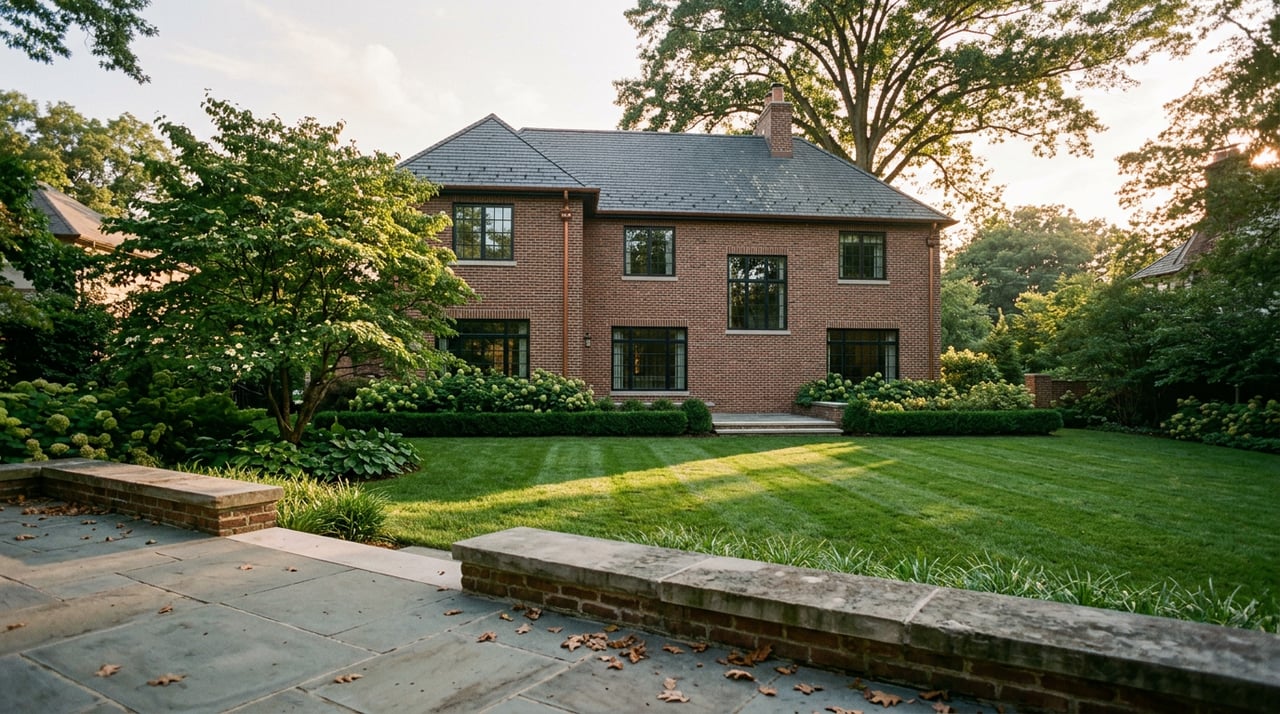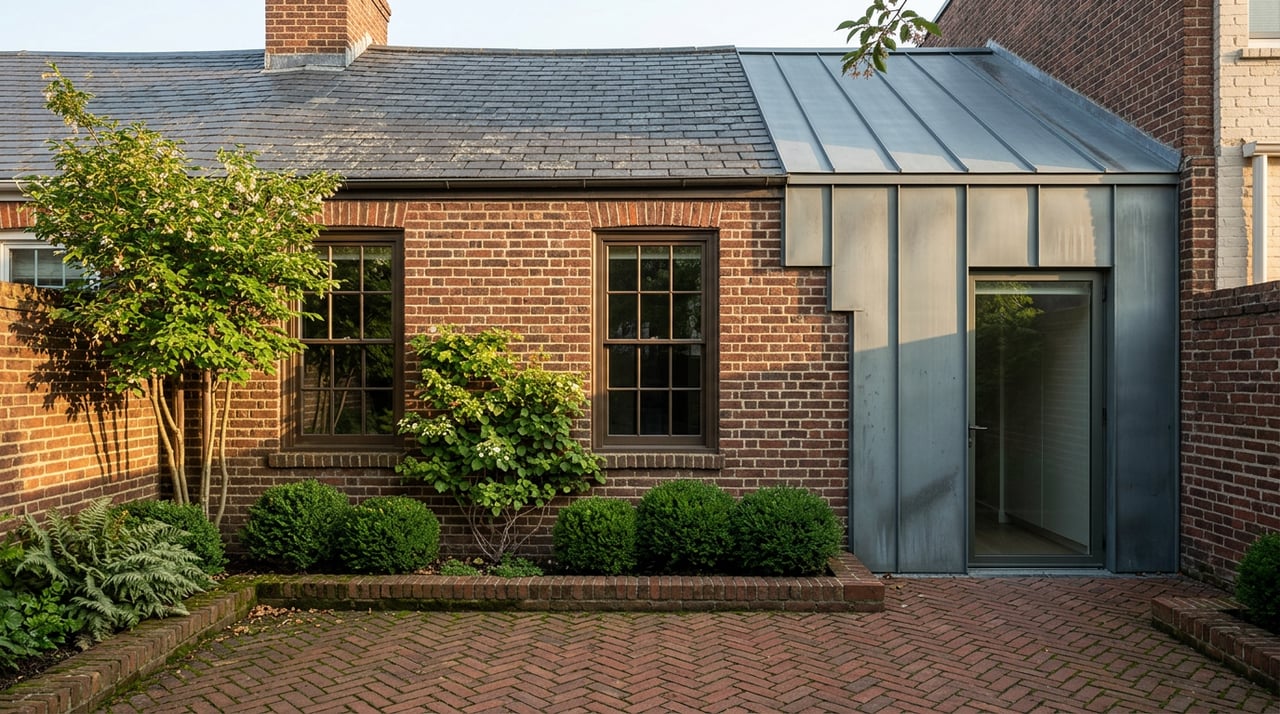
A rear addition at 3316 Reservoir Road NW came up for concept review at the Old Georgetown Board's May 2026 meeting. Two doors down the review track, a homeowner on 34th Street NW was trying to replace a fence. And a few blocks over, plans for a new single-family house on a long-vacant lot at 3245 O Street NW were sitting in their third straight month of concept review, having already gone through March and April without a final sign-off.
None of these went before the DC Historic Preservation Review Board. That surprises most people, including buyers who assume Georgetown works like every other historic district in the city.
The board everyone assumes is in charge
Ask most agents, contractors, or homeowners in DC how historic review works and you'll get a version of the same answer: your project goes to HPRB, the District's Historic Preservation Review Board, and if it's minor enough, staff at the Historic Preservation Office clears it without a hearing. That's accurate for Capitol Hill, Dupont Circle, Logan Circle, and most of DC's other historic districts.
Georgetown doesn't work that way. Federal law gives the U.S. Commission of Fine Arts review authority over most exterior construction in the neighborhood, and in practice that authority runs through a three-architect advisory panel called the Old Georgetown Board. The OGB reviews the design, the full Commission adopts or modifies that recommendation at a public meeting in DC, and only then does the case return to the District. HPRB and the Historic Preservation Office pick up whatever's left over: work that can't be seen from a public street or alley, plus property subdivisions.
The practical effect is that HPRB, the body most permit guides tell you to worry about, barely touches the exterior of a Georgetown home. The federal commission does.
The two-track system, side by side
| Most DC historic districts | Georgetown | |
|---|---|---|
| Reviews exterior work visible from public space | HPRB / Historic Preservation Office | Commission of Fine Arts, via the Old Georgetown Board |
| Reviews work not visible from the street | HPRB / HPO | HPRB / HPO |
| Board composition | Nine District residents appointed by the Mayor | Three architects appointed by the Commission of Fine Arts |
| Final decision-maker | HPRB | The Commission of Fine Arts, based on OGB's recommendation |
| Local ANC role | Comments on HPRB applications | Comments on OGB applications, plus its own two-day-earlier courtesy review |
The Old Georgetown Board doesn't approve anything on its own. It makes a recommendation, the full Commission adopts it, and the file comes back to DC for the Historic Preservation Office to finish the administrative work before the Department of Buildings will even look at your permit application. HPRB only steps in on its own if the case touches something CFA doesn't reach, or in the rare instance the two bodies' standards diverge enough that HPRB wants a look.
The test that decides which track you're on
The dividing line isn't the size of the project. It's visibility. Commission of Fine Arts staff determine whether a proposed change can be seen from a public street or alley, and if that's unclear, they conduct a site visit to check. One detail catches people off guard here: vegetation doesn't count. A fence, addition, or roofline that's currently hidden by a hedge or a tree canopy is still treated as visible if the plantings weren't there, or could be removed. Owners can't rely on landscaping to keep a project out of CFA's jurisdiction.
Rear additions almost always land on the OGB/CFA docket, because in a rowhouse neighborhood, rear elevations are frequently visible through side yards, alley gaps, or from the street behind. Rooftop decks and pop-ups get the same scrutiny if they can be seen from a street, which architects who work in the neighborhood regularly say is the harder test to pass here than in DC's other historic districts, because Georgetown's rowhouses sit close together on narrow, often sloped streets where sightlines carry further than owners expect.
What the actual path looks like
For anyone planning exterior work in Georgetown, the sequence generally runs like this:
- Contact the Historic Preservation Office before filing anything. HPO staff will tell you whether CFA or HPRB has jurisdiction based on visibility.
- If your project involves major construction, present it to Advisory Neighborhood Commission 2E first. ANC 2E typically meets two days before the monthly Old Georgetown Board session specifically to review the upcoming docket.
- File for concept review with the OGB. This is a design-direction check, not a permit. It lets you find out if your general approach is acceptable before you pay for construction drawings.
- Revise based on OGB and Commission of Fine Arts feedback. Some cases clear in one round. Others don't.
- File for permit review once the concept is settled, with complete architectural drawings.
- After the Commission of Fine Arts finishes its recommendation and DC's Historic Preservation Office completes its paperwork, submit the building permit application to the Department of Buildings.
The 3245 O Street NW case shows what happens when step four repeats. That new-construction proposal for a vacant lot went through concept review in March, came back again in April, and was still on the docket for May, three consecutive monthly cycles before a final concept sign-off. Compare that to the fence replacement at 1726 34th Street NW, filed directly for permit review with no concept stage needed, because a fence swap is a much lower bar to clear.
Why the clock runs longer here than the guides suggest
Generic DC renovation content will tell you HPRB review adds six to twelve weeks. That estimate assumes you're going through HPRB. In Georgetown, you're more often waiting on the Commission of Fine Arts' own monthly meeting calendar, which runs on a separate schedule than HPRB's. Miss a filing deadline for one cycle, or draw an ANC 2E objection that triggers a deferral request, and the case simply waits for the next month's docket. A project with a straightforward one-round concept approval can still take two to four months from first filing to final sign-off. A rear addition, rooftop deck, or new construction that needs a second or third round, like the O Street project, can run six to twelve months before a permit application even reaches the Department of Buildings.
None of that includes the separate building permit process at DOB once preservation approval is in hand.
The cost of skipping the process
DC's 2024 Protecting Historic Homes Amendment Act put real numbers behind unpermitted work in historic districts. Unpermitted alterations carry fines up to $10,000 per violation. Willful demolition or unauthorized alteration starts at $10,000 and can reach $25,000 per violation. On top of the fine, the owner has to restore the property to its condition before the alteration, at their own expense, before any new application can even move forward.
For a buyer, that changes what a home inspection can't tell you. A rear addition or roof deck that looks finished and lived-in may or may not have cleared CFA and DC's own sign-off. The permit history, tied to both a DC building permit number and a separate Old Georgetown Board case number, is the only way to know for sure.
What this means if you're buying, selling, or holding for the long term
If you're considering a Georgetown rowhouse for a value-add project, budget the six-to-twelve-month range for any exterior scope, not the six-to-twelve-week range that applies elsewhere in DC. That timeline belongs in your underwriting from the start, not as a surprise after you're under contract.
If you're selling a Georgetown home where you've done exterior work, pull the OGB case file and the DC building permit together before you list. Sophisticated buyers in this market, and their attorneys, know to ask for both. Georgetown townhouses were listing around $2.5 million in early 2026, with the broader neighborhood median closer to $1.8 million in late 2025, and homes were spending anywhere from 45 to 100-plus days on market depending on condition and price point. In a market where buyers have time to ask questions, an incomplete permit trail is the kind of detail that shows up in a lower offer or a longer negotiation, not a walked deal.
If you're buying, ask for both file numbers before you assume a renovated Georgetown home is renovated correctly.
A few questions that come up often
Does interior-only work ever trigger this review? Generally no. Interior renovation that doesn't affect the exterior or a protected public space typically falls outside both CFA/OGB and HPRB jurisdiction, unless the interior is separately designated historic, which is uncommon for private rowhouses.
What about solar panels or rooftop equipment? These are treated as exterior work and reviewed for visibility like anything else. Panels and mechanical equipment placed on rear-facing or flat roofs, out of sight from the street, have an easier path than anything mounted where it can be seen from public space.
Does Georgetown's National Register listing add another layer? It runs alongside the DC historic district designation, but for a private owner without federal funding or a federal permit involved, it doesn't add a separate review requirement. The DC and CFA process already described covers what most owners will face.
Can a project skip concept review and go straight to permit review? Only in narrow cases, and only at the direction of Old Georgetown Board staff, based on the project's scope and how much design flexibility remains. Most owners are better served by concept review first since it's the cheaper place to find out if your general approach works before commissioning full drawings.
Georgetown's history is the reason people want to live there, and it's also the reason a renovation timeline or a resale disclosure conversation looks different here than three blocks away in Burleith. If you're weighing a purchase, a project, or a sale in Georgetown and want to talk through what the permit history on a specific property actually tells you, District Property Group is a good place to start that conversation.